The Prophet Elijah

BORN: circa 900 BC
DIED: circa 850 BC
Elijah the Mentor
Carmelites across the centuries have been inspired by the spirit of Elijah. Stretching back more than 800 years before the time of Christ, the Elijan tradition on Mount Carmel has fired the zeal of disciples. Eventually the Order of the Brothers of the Blessed Mary of Mount Carmel came to be established there in the early 13th century. Such was the outstanding character of Elijah that dedicated hermits of later times, following the footsteps of Jesus, chose him as their model when they settled near the spring called after him on the slopes of Carmel.
My God is Yahweh
Who then was this great man of God, who lived always in His presence and fought zealously for the worship of the one true God, who arose like a fire and whose word burned like a torch? Through his withdrawal into solitude, this prophet of Carmel lived in the truth of God and in silence slaked his thirst from the torrent of divine Love. Filled with zeal for God’s glory he was attentive to His voice in the whisperings of a gentle breeze, and in the Bible we see Elijah responding to that delicate voice with courageous faith throughout his entire mission to the people and needs of the time. The very name Elijah means, “My God is Yahweh”.
Elijah in the Book of Kings
What does the prophet Elijah mean to us today? We are given a vivid account of his adventures in 1 Kings 17–19, 21 and 2 Kings 2 – a paragon of fidelity and loyalty to God. “How long will you limp between two sides? If the Lord is God, follow him.”
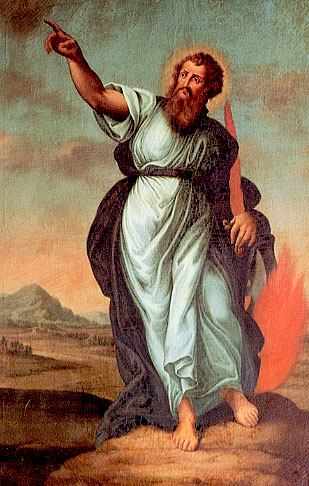
True servant of God and at His bidding, he fought long and hard, usually alone, against idolatry in proclaiming God’s mercy and love and in restoring the people of his day to the one true faith. One who denounced idolatry and infidelity by announcing a three-year drought to powerful King Ahab and promptly disappearing, was a courageous man indeed. The contemplative hidden in solitude by the wadi Cherith was mighty in prayer. The desert dweller who asked the widow of Zarephta for her last meal then seemed to bring tragedy in the death of her son yet proved to have greater power with his God by bringing the boy back to life. The daring individual whose faith challenged the prophets of Baal on Mount Carmel was filled with zeal for truth, was single minded in allegiance to the God of Israel and able to laugh in good humour at his foes.
But Elijah also knew great fear; his life was in danger as the powerful sought to kill him. He was subject to discouragement, loneliness and weariness, almost succumbing, until the Angel of God was sent to sustain him for a longer journey. Finally, Elijah reached Horeb, the Mountain of God, where he experienced his Lord more intimately. It was in the tiny whisper of the gentle breeze that he was touched to the heart, in profound silence and peace. At the end of his earthly life a mystic fire took hold of him, and he bequeathed his mantle, signifying a share of his double spirit, to his successor, Elisha.
The Small Cloud
That prophetic spirit is passed on and generations in the Carmelite tradition have found their identity deeply rooted at the life-giving spring of Elijah. In contemplative prayer and zeal they draw fruitful grace upon the world. The vision of the small cloud which Elijah saw rising out of the sea was to prefigure the Virgin Mary who was to bring forth the Saviour. The two are linked as models for all who live in fidelity to Jesus Christ.
Elijah Present at the Transfiguration of Christ
Elijah’s presence on Mount Tabor at the Transfiguration is a further witness to the unique role of Carmel’s prophet in the transcendent mystery of God’s presence in our midst.
Elijah, a Model of Efficacious and Mystical Prayer
The challenge of Elijah remains today, only the idols and Baals are more subtle.
In this century there are endless expressions of idol worship, self-centeredness and greed for wealth. The voice of God is drowned out by falsehood and infidelity. Yet still Elijah calls us to the worship of the One God: “If the Lord is God, then we must follow Him.
The Elijah stories in the Bible are not just prophetic legends. They deal with social and economic issues at the basis of Israel’s religion and the fundamental belief that the Lord alone provides and protects Israel. Carmel, the vineyard of God, is here the site of creation and recreation.
In medieval mythology Elijah was remarkably popular and for the early Carmelites of the 13th century he gave legitimacy when they were threatened with suppression. He was the model of efficacious and mystical prayer, the powerful prayer that can move God to action on behalf of His people. From Elijah Carmelites learn to prepare a way for the Lord in purity of heart and in openness to God’s transforming grace to experience God himself. This is the truth of love which surpasses historical fact.
The feast of Elijah has been celebrated in the Carmelite Order since the 16th century on 20th July.
We honour this Father figure who inspires holiness and stands before the living God to intercede on our behalf.